
Back working parents or lose them, HR leaders told
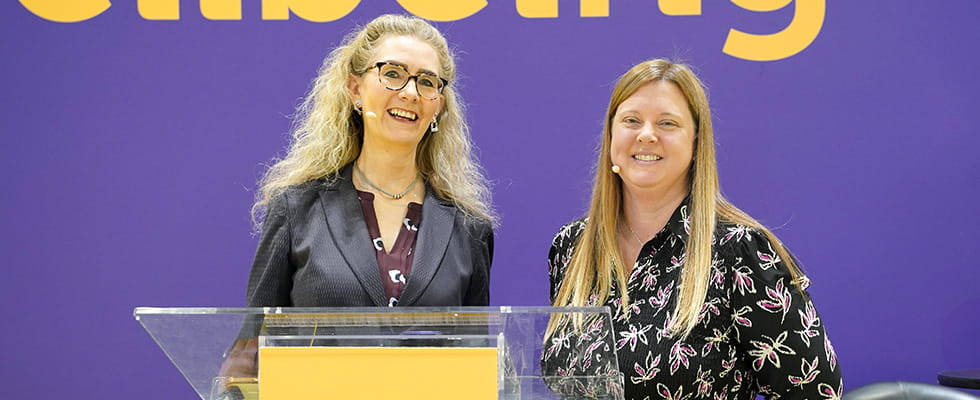
Employers that fail to support employees through every stage of family life risk losing skilled and experienced people, HR leaders heard at the CIPD Festival of Work this week.
Speaking at a fireside session at ExCeL London on 11 June, Jennifer Liston-Smith, Strategic Advisor for Bright Horizons Work+Family Solutions, and Leah Gray, UK & Ireland Benefits Manager at Marsh, told an audience of HR and people professionals that support for working parents and carers has become essential to organisational performance.
The session, titled 'Easing the squeeze: Why supporting every family life stage is the future of wellbeing', drew on findings from the Work-Life Gap Report 2026, the latest research from Bright Horizons Work+Family Solutions comparing the experiences of employees with and without access to practical care support. Around half of the UK workforce has family dependants, making work and family pressure a structural feature of the modern workforce rather than a marginal concern.
The research finds that among the wider UK workforce, only 37% of working parents and carers feel able to switch off and maintain healthy boundaries between work and life. Among employees using Bright Horizons Back-Up Care, that rises to 67% who say their family friendly benefits help them disconnect, maintain balance and stay focused at work. The productivity effect is equally direct, with 79% of back-up care users saying it enabled them to work on days they otherwise could not have.
The career consequences are sharpest for women. Among unsupported working mothers, 48% say caring responsibilities have negatively affected their career. Among mothers with access to back-up care, 83% say the support helps keep their career on track and 85% say it increases their likelihood of staying with their employer.
Jennifer Liston-Smith said: "Every stage of family life is crucial to wellbeing, and crucial to allowing our organisations to do what they need to do."
Leah Gray shared Marsh's experience of building support for employees across every life stage, and the measurable impact on engagement, productivity and the retention of skills and talent. She also offered a candid view of the challenge facing HR decision makers seeking to introduce similar provision.
Leah Gray said: "The hardest thing is securing the budget and quantifying the return on investment. The people who hold the purse strings need to be convinced." However, she added that when Back-Up Care directly saves many days of absence, the ROI for the business is clear, even before quantifying the positive impact in wellbeing, retention, or engagement.
The Work-Life Gap Report 2026 addresses directly that challenge of demonstrating evidence, setting out the mechanism by which practical support delivers a return: support at moments of disruption reduces stress and mental load, enabling focus and presence, which in turn sustains productivity, retention and workforce resilience. Even more simply, the employee is present and working when they’d otherwise be absent or juggling care and work unproductively. The findings also point to a cultural dividend. Employees with access to practical support are 16% points more likely to say their manager cares about their work-life balance, and 81% of back-up care users report a positive impact on their mental and emotional wellbeing.
The CIPD Festival of Work took place at ExCeL London on 10 and 11 June 2026, bringing together more than 12,000 HR and people professionals across two days.

